Free Fiction Friday: “Broken”

Broken

Broken

Written by P.R. O’Leary, 2005.

Photography by Nicole Holovinsky of Drawing with Lights.

Antique stores, garage sales, flea markets. Anywhere you find collectables trading hands you will find me. I’m the guy searching through the bargain bins, studying the damaged toys and the dusty cracked lamps and the chipped pottery. These I buy. These I add to my collection.

From a young age we are taught that things have worth only if they are perfect. But perfection only means something is exactly the same as the mold that it came from. The truth is that a chip on a Chinese brush pot makes it unique. A plastic Darth Vader toy missing his arms is one of a kind. They have broken the mold, graduated beyond their show room condition.

My collection takes up my whole house now. Rooms full of dolls without limbs. Books burned or missing half their pages. Necklaces and bracelets with holes where precious stones used to be. Damaged goods. Cookie-cutter antiques made one of a kind.

Sometimes I sit and stare at a Russian Niello Snuff Box with the lid cracked in half, or a steel Rolex watch missing one strap and wonder how it happened. The event that elevated it from one in a thousand to one in a million. I call this moment its birth.

The 1908 Steiff Teddy bear was born the moment he lost his leg and half the stuffing leaked out. He now sits there, sewn up and thin on one side like a stroke victim. Now he’s one of a kind.

The white and blue 1750 Worchester porcelain mustard spoon was born the moment it lost its handle. Now it’s just a small empty bowl with a shard sticking out. Now it’s one of a kind.

The Lefton Ceramic Easter Egg Trinket was born the moment it cracked in half. It sits there in two pieces like someone tried to make an omelet out of it. Now, this broken porcelain egg, it’s one of a kind.

Of course, these births have to be natural occurrences. I don’t go out and buy vintage Beatles records and melt them in my oven. That takes the life out of them. It’s like ripping a premature baby from the womb, too young to survive in the real world. I wait until they make themselves. These things, these damaged goods. These to me are unique and wonderful.

My dog, Lou, I got three years ago. He was born when he had his leg removed. Tumors. He was abandoned, wandering the streets, and the tumors just kept growing. When the pound got him his leg was almost as big as the rest of his body. There was nothing they could do but amputate.

After that, I took him home from the pound. Lou, the three-legged dog. His imperfection makes him unique. One of a kind. Special.

I started my collection ten years ago. A year after I was born.

It happened in a factory. My job was to glue razor sharp knives to pieces of plywood to make cutting dies. The accident wasn’t painful. One minute I was working, the next I was in the hospital. I was told later a forklift had hit the plywood I was working on, shoving it into me and driving the knives and razors into my arms and legs. Unconsciousness, loss of blood, but I was going to be fine.

Until the infection. It started in my leg and threatened to rise up towards my groin and into the rest of my body. The doctors tried but in the end they had to amputate. Right above the knee.

Next came a lawsuit, then a monthly allowance and the ability to sit at home and feel sorry for myself. Oh, my friends tried to make me get out of the house but there really wasn’t any place you could take a cripple without him seeing people walking around on two legs.

That’s when I found the doll. Sitting in the back of my closet. A remnant of a life before the accident when I had nieces and nephews over to play. Before they were scared of the shadowy uncle missing a leg.

She was a little girl doll. And yes, she was also missing a leg. A little schoolgirl, with hair made of yarn and a plastic face with painted-on freckles. This perfect little girl, missing a leg.

Then it snowballed. I went out and got other dolls. Other dolls missing limbs and eyes. Then I branched out and got other things. Toys, pottery, porcelain. And now here I am. A unique man with a unique dog and a unique collection of unique items. No two alike. All imperfect, all just right.

Broken2

My friends were scared. Troubled. They told me to sell all this junk and get a desk job. Meet new people. Get a fake limb and get my life going again. They gave me the card of an antique dealer they knew. Someone who would give me a good price for my collection.

Eventually, they stopped showing up. I wasn’t in mint condition anymore. I refused to conform to the two-legged walking society. They felt that it was time for us to part ways. They didn’t say that of course, but I knew.

The card for that antique dealer sat on an old English occasional side table. The table was missing one leg and was propped up against the wall. The card gathered dust.

Not having friends for a while, that changed me a bit. Is there something wrong with me? They call my collection junk. I call my collection unique. Each and every item is special. I tell myself this. Then I call the antique dealer.

Oh yes, he says. He would definitely want to check out my collection of Chinese nesting dolls. My Mother of Pearl flatware and my Persian carpets. I don’t tell him they are broken. That they are damaged. He is coming tonight. He sounds excited.

When he knocks on my door even his knock sounds excited. I wheel over and let him in. An older man, all suit and glasses. He vigorously shakes my hand and walks in before I ask him to. My collection is everywhere and he immediately zooms towards a shelf. His eyes and fingers move over the items, touching each one slightly and continuing on, muttering to himself all the while. In less time than it takes me to turn my wheelchair around he is onto another shelf. Then another. Then into the next room. He is halfway around it before I get there, and as I watch he finishes and turns towards me.

“Do you have anything that’s not broken?”

I tell him no. Everything here is broken. Everything is missing a piece or has a crack or a dent. Everything is unique.

“Unique?” he says. “Worthless more like it. Those are defects. Nothing in here is in perfect condition.”

He speaks quickly and angrily.

“For a thing to have value. It has to be mint. Nothing can be wrong with it. All its pieces must be there. No dents, no scratches, no cracks.”

He picks up a turn of the century Santa Claus Bisque doll, missing an arm. “This,” he says, “would be worth about one thousand dollars. Now, defective, it’s worthless.”

Exasperated, he puts it down, almost throws it down. I try to talk to him as he walks towards the door. I tell him how the damage makes them special. How something has happened to everything in my collection that makes them unique. How being perfect is not that important.

“Worthless.” He says again as he walks towards the door.

He opens it and walks out. I stop at the doorframe and look outside. I scream at him. There is nothing wrong with these things! They are not worthless! Tell me they are not worthless!

He walks on, turns the corner and is gone.

I am talking to myself.

They are not worthless. Right?

Right?
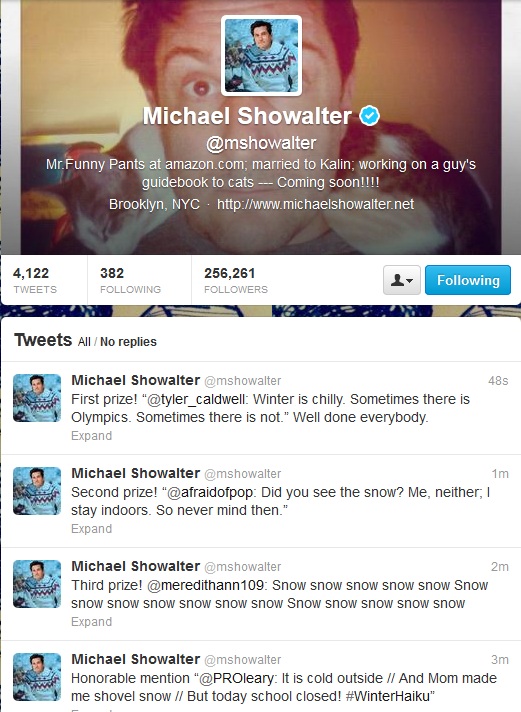
Going Cold Turkey

The number one hindrance to my writing progress is the internet. There is no shame in that. (I don’t think.) I’m sure most people have that same problem, even if they aren’t specifically trying to write. The internet and things it provides can be wonderful and useful. But it can also suck you in and keep you from getting what you need (and even want) done.

I know this. People in my situation know this. But what can we do? I tried to limit my time, which works to a point. But when I sit down at my laptop to write, the internet is just right there. I have even contemplated getting rid of internet access altogether. Now that would be going cold turkey!

But luckily there is another option. And this one is very simple and practical. It’s a clever peice of software called, you guessed it, Cold Turkey. It’s free. All you do is install it, set a time and it will block your computer from connecting to specified websites until that time is reached. And it is NOT easy to bypass. So make sure you know what you are getting into!

I started small. I set it to black all my homepages (social media sites, email, etc.). When I’m ready to write, I set the timer for 30 to 45 minutes. Then, I write. Simple and effective. I can usually stop myself from using the internet for 30 minutes, but it really helps me concentrate when the option is not even available to me.

After that time is up, I’m usually too invested in what I’m doing to stop. So I keep writing or working until I come to a natural stopping point. (Usually, when I just can’t take sitting down anymore.)

So if you are having any of the same problems, I highly recommend this simple remedy. Install and enjoy.

Word Music

This year I have been trying out different writing habits to see if anything fits with my own personal style. For the past two weeks I have been writing with music. Usually, I write in silence, attempting to avoid all distractions.

But I read some interesting things from Chuck Palahniuk about how listening to music helps him keep a consistant tone to his writing, and how for each novel he listens to a different set of albums to help do that. Here is an excerpt from an interview he did with Bookslut:

The music depends on the tone of the book. In a way, I use a single piece of music to re-create the same mood each time I go back to a project. By listening to it — again and again — I quit hearing the words, and almost hypnotize myself into a fictional world. Andy Warhol used to do this with a record called “I Saw Linda, Yesturday.” His friends grew to hate that song.

And again from ChuckPalahniuk.net:

I use music like a drug. For this non-fiction writing, I like “chill” music – with “Chill Factor Audiotherapy” playing right now. But for editing, I’ll listen to the Chopin Nocturnes that Tiffany Wong sent me. And for the first draft of my next angry story, maybe… Pink Floyd. Other stories, Country and Western. What can I say? I’m a mess.

I think its a good idea. Music does set a mood and it theoretically could help your writing keep the same tone over a time period. For some writers it may work well. But for me it causes too much distraction. My brain is a little too finicky. When there is sensory input coming in I don’t create information at the same rate I would otherwise.

This is the second habit (trick, method, etc) that I’ve researched this year and the second one that I am not going to use for myself. It just goes to show that not all writers are the same. What works for one might not work for another. I just hope, by the end of year, I learn something new that will help make my writing stronger.

The Gender of Pronouns

Whenever you refer to a person in your writing without using a name or a description, you usually have to use a pronoun. But embedded in these pronouns there is already a description. It’s the person’s gender: He/She, Him/Her, His/Hers.

I ain’t no linguist so I don’t know why there are different versions of pronouns. But I can see why, back in the day, gender would be an accepted way to separate them. Now, though, when people are more enlightened and the lines between genders have blurred, We don’t need artificial segregation in our language.

In creative writing it is not really an issue. You usually know the gender of the character being refereed to. And reading those pronouns just feels right. After all, we have been using them forever.

“Jane was a strong woman. When people looked at her they could tell she enjoyed doing impressive things with her muscles.”

“John was a beautiful man. When people looked at him they could tell he enjoyed doing impressive things with his hair.”

I have been working on a rule-book for a Role-playing Game. (Demonize! A competitive RPG debuting soon on this very website!) It contains a paragraph where the player is supposed to fill in the blanks to create a character. But the player could create a man, woman or anything in between, so how do you address pronouns in that situation? Here is what I did:

“In (TIME PERIOD/LOCATION) there lives a (GENDER) named (NAME). Most people see them as (OCCUPATION), but the thing they want most in life is to (ULTIMATE GOAL). If they can just get their (EVIL VICE) under control they might be able to attain that goal. In the meantime, they bide their time (HOBBY) and hoping that (FEAR) doesn’t happen. Little do they know that The Demons have taken notice of them for something terrible they did in order to get where they are today. (TERRIBLE THING)”

Notice I decided to use the “singular they” approach. It sounds fine, right? But when you start to fill in the blanks you will see that the results read quite awkwardly:

“In present day Washington DC there lives a man named Sterling Jackson. Most people see them as a US Congressman but the thing they want most in life is to be elected president. If they can just get their corruption under control they might be able attain that goal. In the meantime, they bide their time sailing yachts and hoping that they don’t get caught lying to the American people. Little do they know that The Demons have taken notice of them for something terrible they did in order to get where they are today. He once had a mistress who threatened to expose their affair. He had her killed before she could talk.”

See what I mean? Yes, I can use “He or she” and “Him or Her”, and besides the masculine pronoun always being the first part of that duet, the main problem is that it’s just too cumbersome.

I was alerted to the existence of gender-neutral pronouns such as Ze/Zir/Zirs and Xe/Xem/Xyr. But it comes down to respecting your reader. Do you really want people to have to look things up to understand what you are talking about?

Invented pronouns (chart stolen from Wikipedia)

Spivak (old) E laughed I called em Eir eyes gleam
Spivak (new) Ey laughed I called em Eir eyes gleam
Humanist Hu laughed I called hum Hus eyes gleam
Per Per laughed I called per Per eyes gleam
Thon Thon laughed I called thon Thons eyes gleam
Ve Ve laughed I called ver Vis eyes gleam
Xe Xe laughed I called xem Xyr eyes gleam
Ze (or zie or sie) and zir Ze laughed I called zir/zem Zir/Zes eyes gleam
Ze (or zie or sie) and hir Ze laughed I called hir Hir eyes gleam
Ze and mer Ze laughed I called mer Zer eyes gleam
Zhe, Zher, Zhim Zhe laughed I called zhim Zher eyes gleam
Yo Yo laughed I called yon Yos eyes gleam

Usually, no. And in the example paragraph I am working on, I feel the best choice is to leave it as-is with the the singular-they. It’s not perfect, but when it comes to grammar (and other things), we are still a society that segregates by gender. So for now this will have to do.